How to Remove Paint Overspray and Stickers from Windows Without Scratching Them
New construction and remodel windows almost always arrive with something on them — paint overspray, manufacturer stickers, tape residue, sometimes drywall dust baked on by the sun. The good news is that removing it safely is a well-established process. The bad news is that doing it wrong is one of the easiest ways to permanently scratch glass that was otherwise brand new.
100+ REVIEWS |
INSURED & BONDED |
100% SATISFIED CLIENTS
What’s the safest way to remove paint overspray from glass?
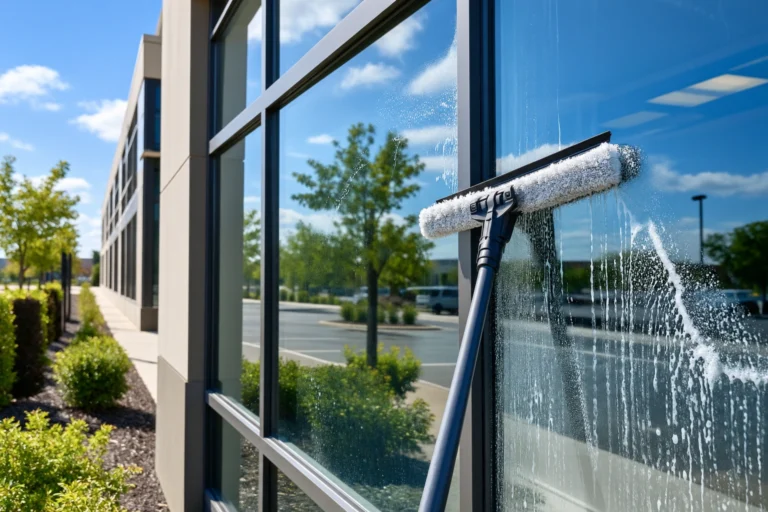
The standard, professional-grade method is a wet razor blade scrape — and the technique matters more than the tool. Soak the painted area generously with a soapy water solution first; the liquid layer is what lets the blade glide instead of catching and dragging. Hold a fresh, undamaged razor blade at roughly a 30–45 degree angle to the glass, and push it forward in one smooth, continuous stroke — never back and forth, and never dragged backward, since the back edge of a blade is rougher and can drag debris across the glass. Re-wet as needed and reset the blade for each pass rather than sawing at the same spot.
Why does the razor blade angle matter so much?
Too steep an angle (much above 45–60 degrees) and you’re effectively grinding the glass rather than lifting the paint off it, which is where scratches come from. Too shallow an angle (under about 10 degrees) and the blade slides over the paint instead of getting underneath it, so it just won’t work efficiently. The 30–45 degree range is the consistent sweet spot across professional sources — steep enough to shear the paint off cleanly, shallow enough to stay flat against the glass.
What should I check before I start scraping?
Two things, before the blade ever touches the glass:
- Test an inconspicuous area first. A dull, chipped, or rusted blade is one of the most common causes of visible scratching — always start with a fresh blade and test a small corner before working the full pane.
- Confirm the glass isn’t tinted, coated, or specialty glass. Low-E coatings, tint films, and specialty coatings are typically applied to one side of the glass, and scraping a coated surface can cause permanent, irreversible damage. If there’s any doubt about whether a window is coated, that’s the moment to stop and check — not after the first pass.
How do I remove overspray from the window frame without damaging it?
The frame material changes what’s safe to use. Vinyl and plastic frames should never be treated with acetone — it can actually melt the material — so rubbing alcohol on a cloth with a bit of patience is the safer starting point. Finished wood frames generally respond well to a small amount of mineral spirits on a rag, but as with the glass itself, test a hidden spot first before treating the whole frame.
Do stickers and adhesive residue need a different approach?
Mostly the same core technique, with one addition: an adhesive remover or solvent applied first to loosen the sticker’s bond with the glass makes the razor blade pass much easier and lowers the risk of dragging residue across the surface. Once the adhesive is loosened, the same wet-blade, single-direction stroke applies.
When should this be left to a professional instead of DIY?
A few situations are worth handing off rather than attempting yourself: widespread overspray across many panes (a genuinely tedious, time-consuming job even with the right technique), and anything involving historic, custom-etched, or specialty-coated glass, where a single wrong pass can mean replacing an entire pane rather than just re-cleaning it.
Got Questions?
We’re happy to help. If you can’t find the info you’re looking for, please don’t hesitate to reach out to us!
Call us (323) 831-1260