
Does Rain Make Clean Windows Dirty?
Does Rain Make Clean Windows Dirty?
Portland sees around 150 rainy days a year, so it is a fair question. Here is what rain actually does to clean windows, and when spots mean something else.
100+ REVIEWS |
INSURED & BONDED |
100% SATISFIED CLIENTS
No. Rain falling on truly clean glass dries clean — it only redistributes dirt already sitting on your windows, frames, and sills. If windows look spotty after rain, they were not fully clean to begin with. Portland's rain is naturally low in minerals, so spots point to dirty frames, pollen, or sprinkler overspray — not the rain itself.
Why Does Rain Get Blamed for Dirty Windows?
It is the number one objection window cleaners hear, and the confusion is understandable. When rain hits a dirty window, water mixes with accumulated dust, pollen, and grime on the glass. As it dries, it leaves concentrated streaks wherever dirty water pooled and evaporated. Homeowners see new spots after a storm and conclude the rain caused them.
In reality, a professionally cleaned window — glass, frames, sills, and tracks — does not develop these spots, because there is no grime for the rain to redistribute. The rain did not dirty the window; it revealed and rearranged dirt that was already there. That distinction is the entire answer, and it is why pros are so confident telling Portland homeowners not to fear the forecast.
What Happens When Rain Hits Dirty vs. Clean Glass?
The physics are straightforward, and they explain every "rain ruined my windows" story.
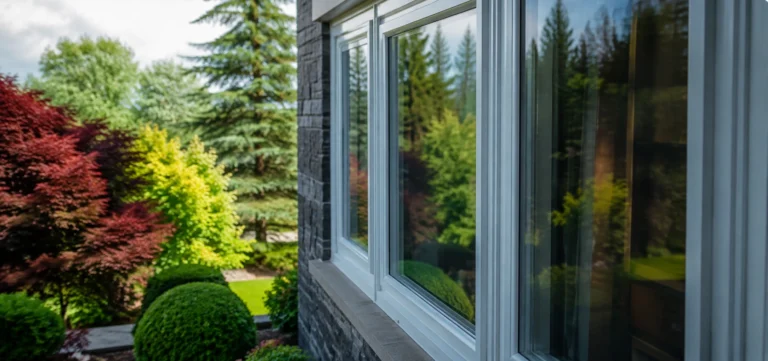
On clean glass, rainwater sheets evenly across the smooth surface. Because the water is naturally low in dissolved minerals and there is nothing on the glass to dissolve into it, it evaporates and leaves nothing behind. Clean glass is hydrophilic — water spreads into a thin film rather than beading — so it dries uniformly without rings.
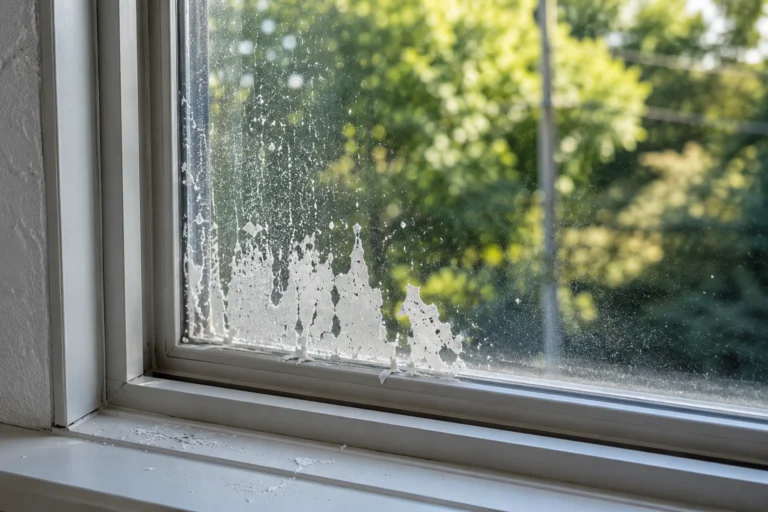
On dirty glass, the story flips. A film of dust, pollen, or oxidation makes the surface patchy and water-repellent in spots. Rain beads up on the grime, and each droplet becomes a tiny dirty puddle. When those droplets evaporate, they deposit their load of dirt in concentrated rings and streaks. The dirtier the glass, the worse the spotting.
Runoff makes it worse. When rainwater runs across a dirty roof or siding before reaching the glass, it picks up minerals, algae, and debris along the way. Spots from this kind of runoff are a drainage problem, not a rain problem — the water arrived dirty.
When Can Rain Actually Cause Spots?
Rain gets a fair trial here: there are a few situations where rainfall genuinely contributes to spotting.
- Hard water in runoff. Rain that washes across concrete, dirty siding, or roofing picks up minerals before it hits the glass. Lower windows below roof drip lines are the usual victims.
- Sprinkler overspray. Many "rain spots" are actually irrigation spots. If spots concentrate on lower windows near landscaping beds, check your sprinkler aim before blaming the sky.
- Dirty frames, sills, and tracks. Grime packed into tracks and weep holes washes out during heavy rain and flows down over clean glass. This is the most common cause of post-rain streaks on otherwise well-kept homes.
- Pollen season. In spring, rain mixes with airborne fir pollen and deposits a yellow-green film as it dries. The pollen is the problem; the rain is just the delivery method.
Notice the pattern: in every case, something other than the rain is the actual source of the spots.
Portland's Rain, Pollen, and Moss: The Local Reality
Portland averages around 150 to 160 days of measurable precipitation a year — most of it light drizzle rather than downpours. Constant moisture without real drying time creates a triple threat for windows.
First, fir pollen films glass every spring. Portland's evergreens release enormous pollen loads, and a yellow haze on windows in April and May is pollen, not dirt in the usual sense. It needs to be rinsed off, not wiped — dry-wiping drags the gritty grains across the glass.
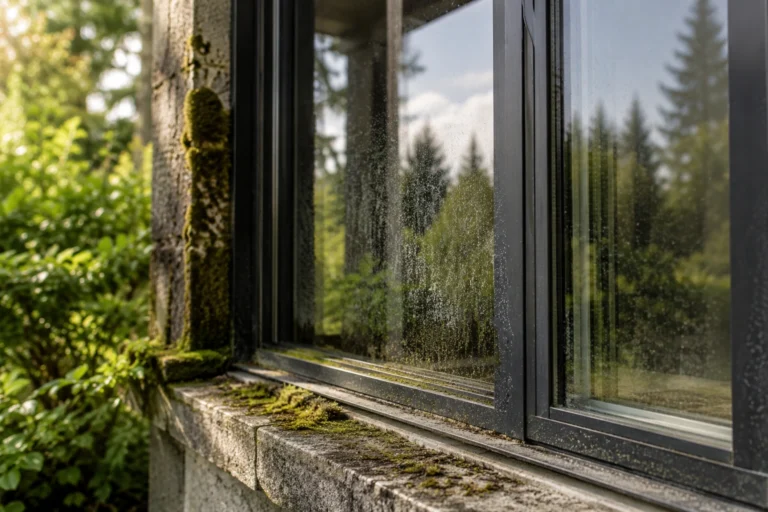
Second, moss and algae thrive on frames and sills in our damp climate. Once established, they hold moisture against the frame and shed organic debris onto the glass with every rain. Homes under big firs or on the shady north side get it worst.
Third, mineral deposits build up on surfaces that never fully dry. Even though our rain is soft, months of dampness let trace minerals accumulate, especially where sprinkler overspray or roof runoff is involved.
Local guidance: Portland homes need at least two full cleanings a year, and homes under big firs or with sprinkler overspray benefit from a third visit. August is the last reliable dry window before fall rain — and booking backlogs spike once it starts, so late summer is the smart time to schedule.
What to Do If Spots Appear After Rain
Spots after a storm are a diagnostic clue, not a disaster. Work through this checklist:
- Look at where the spots are. Lower windows near landscaping point to sprinkler overspray — adjust the sprinkler heads. Spots below the roofline point to runoff carrying roof grime.
- Wipe a frame with your finger. If your finger comes away grimy, the frames and tracks are the source. They need cleaning and rinsing, not the glass.
- Check the screens. Dirty screens shed debris onto glass in wind and rain. If screens are visibly dusty, clean them separately.
- Test whether spots wipe off. Spots that wipe away are surface grime. Crusty white spots that resist are mineral deposits — try a 50/50 white vinegar compress for up to an hour. Spots that never change are likely etched glass, which needs restoration.
- If spots return after every rain, the frames, sills, tracks, or screens are overdue for a full professional cleaning. The glass is not the problem.
One more check while you are at it: if the "spots" are actually fog trapped *between* the panes, no cleaning will help — that is a failed window seal, and the glass unit needs replacement.
Frequently Asked Questions
Should I wait until dry season to get windows cleaned?
No. Waiting means living with dirty windows for months, and professionally cleaned windows handle rain fine. That said, August is popular — the last reliable dry stretch before fall, and schedules fill fast once the rain starts. Book early if you want an August slot.
Will morning dew spot my clean windows?
Dew is mostly pure condensation — very low in minerals — so it behaves like rain on clean glass and dries clean. It can carry airborne pollen or dust it picked up, but on properly cleaned windows with clean frames, dew is not a spotting risk.
My neighbor says rain ruins window cleaning. Is he wrong?
He is observing something real — spots after rain — but misattributing the cause. His windows had dirty frames, tracks, or screens transferring grime onto the glass when it rained. A complete cleaning that includes frames, sills, tracks, and screens solves it. The rain was the messenger, not the culprit.
How often should Portland homeowners have their windows cleaned?
Twice a year is the minimum most local pros recommend — spring to clear pollen season, fall to head into the rainy months clean. Homes under big fir trees or with sprinkler overspray hitting the glass benefit from a third visit. Waiting longer lets moss, pollen film, and mineral deposits build to the point where cleaning takes twice as long.
Can rain clean my windows for me?
Not really — rain rinses loose surface dust at best. Pollen films, frame oxidation, algae, and bonded grime need mechanical cleaning: agitation, squeegee removal, rinsed frames. A rainy month can make neglected windows look worse, since each storm redistributes existing grime into fresh streaks.
When is the best time of year to clean windows in Portland?
Spring and fall are ideal: mild temperatures keep cleaning solution from flash-drying. A cloudy day gives better results than a sunny one, which makes Portland's overcast skies an advantage, not a drawback. For exterior work, book by August — the last dependable dry window before fall rain and the seasonal scheduling rush.