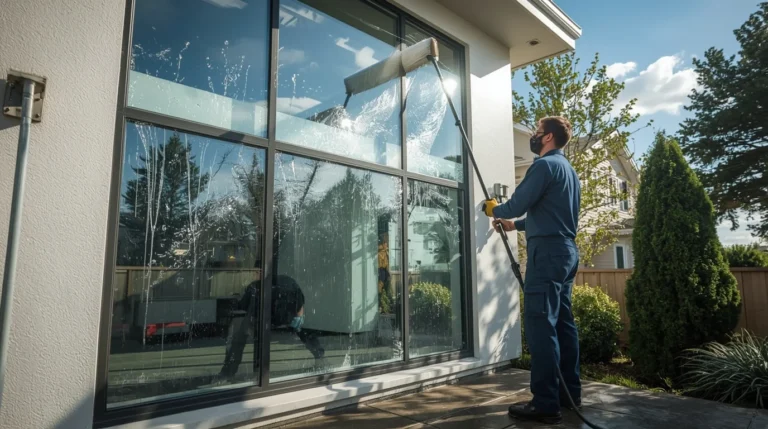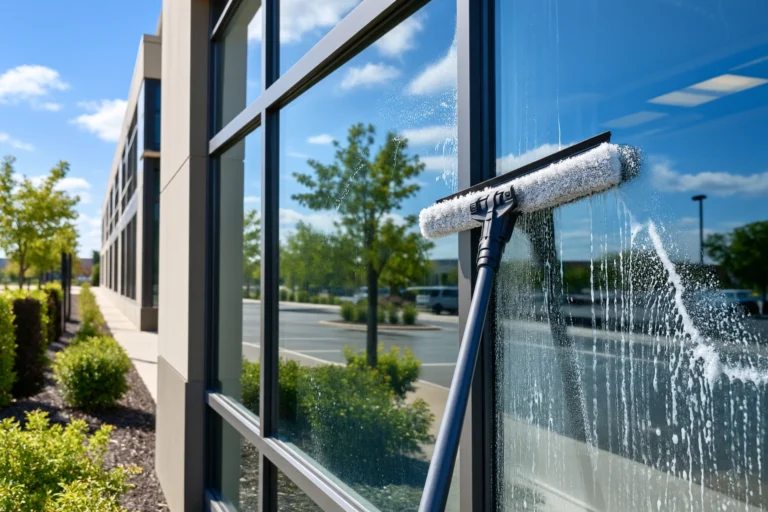

Why Do My Windows Have Streaks After Cleaning?
Why Do My Windows Have Streaks After Cleaning?
Rainbow streaks on freshly cleaned windows are almost always a technique problem, not a product problem. Here is why it happens and how Portland pros get glass streak-free.
100+ REVIEWS |
INSURED & BONDED |
100% SATISFIED CLIENTS
Rainbow streaks on freshly cleaned windows are almost always a technique problem, not a product problem. Pressing a squeegee too hard deforms the rubber blade, leaving thin ridges of soapy water that dry as visible streaks. Direct sun, too much soap, or skipped frames cause the same result. Fix the technique and the glass dries clear.
What Causes Streaks on Windows After Cleaning?
Most DIY cleaners blame their cleaning product or assume the squeegee rubber is worn out. Professionals see it differently: streaks are a symptom of how the solution was applied and removed. Here are the five most common causes.
1. Pressing Too Hard With the Squeegee
The top cause pros cite. A squeegee is designed for light, gliding pressure — press hard and the rubber flattens, losing even contact with the glass. The deformed edge leaves microscopic ridges of solution that dry into rainbow streaks (thin-film interference from a soap layer molecules thick).
The fix: Glide with light, even pressure at a 10 to 15-degree angle in smooth, overlapping strokes — the tool's weight does the work. On very dirty glass, Z-pattern passes push dirty water toward the blade edge.
2. Cleaning in Direct Sunlight
Sunlight flash-dries solution before you can squeegee it off, baking streaks in. South and west-facing windows at midday are worst — the glass runs far hotter than the air, and once solution dries on its own, buffing won't fully remove the surfactant film.
The fix: Clean on cloudy days or in the shade — early morning or late afternoon. Portland's overcast skies are genuinely ideal. Counter-intuitive but true: a cloudy day beats a bright sunny one.
3. Using Too Much Soap
More soap doesn't mean cleaner windows. Leftover surfactants form a film that refracts light into haze and attracts dust, so windows look dirty again within days. A few drops of dish soap per gallon is plenty.
The fix: Keep it mild — just enough soap to break surface tension so water sheets evenly. If glass feels slippery after cleaning, you used too much; rinse and start over weaker.
4. Wrong Towels and Cloths
Standard microfiber can leave lint and grind fine dirt across glass instead of lifting it. Pro demos show a waffle-weave towel eliminates streaks: its textured pockets trap dirt and absorb water instead of pushing residue around. Paper towels are worse, leaving fibers stuck to the glass.
The fix: Detail edges and sills with a dry waffle-weave towel, and use separate cloths inside and out so outdoor grit never touches indoor glass. Never dry-wipe pollen — rinse first so you aren't dragging grit across the pane.
5. Dirty Water or Worn Tools
A dirty applicator dipped back in the bucket spreads grime onto the glass with every stroke. A nicked blade leaves a matching line each pass, worsening as the nick catches debris. When streaks persist despite good technique, the tool or the water — not the method — is usually the culprit.
The fix: Change bucket water when it looks cloudy and rinse the applicator sleeve often. Replace rubber at the first sign of nicks — for twice-a-year cleaners, a fresh blade annually is enough.
Does Water Quality Cause Window Streaks?
It can, but it is rarely the main factor. Water contains dissolved minerals (total dissolved solids, or TDS), which stay behind as spots when water evaporates. The harder the water, the heavier the spotting.
Portland gets a break: our Bull Run supply is officially classified as very soft, just a few parts per million of hardness. Mineral spots from bucket water are uncommon here — crusty white spots are more likely from sprinkler overspray or roof runoff.
In hard-water regions, pros use purified deionized water-fed pole systems that leave zero residue. In Portland, technique matters far more than water treatment — a pro with soft tap water and correct technique beats a homeowner with distilled water and bad technique.
Why Your Window Frames Are Re-Dirtying Your Glass
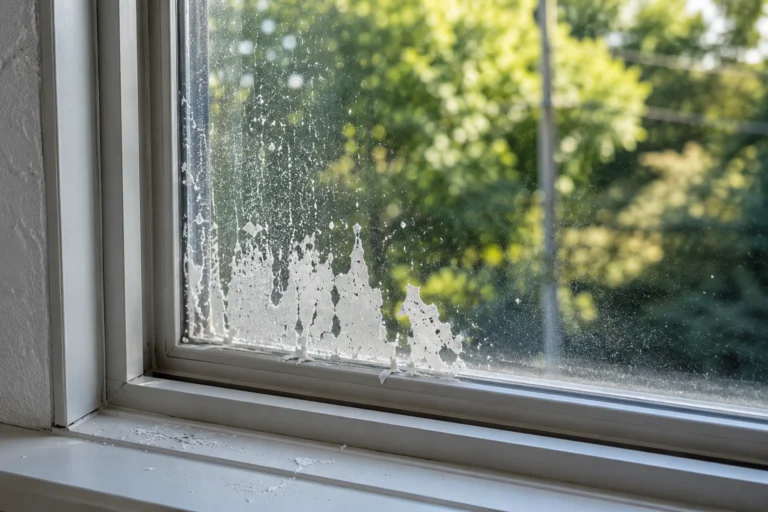
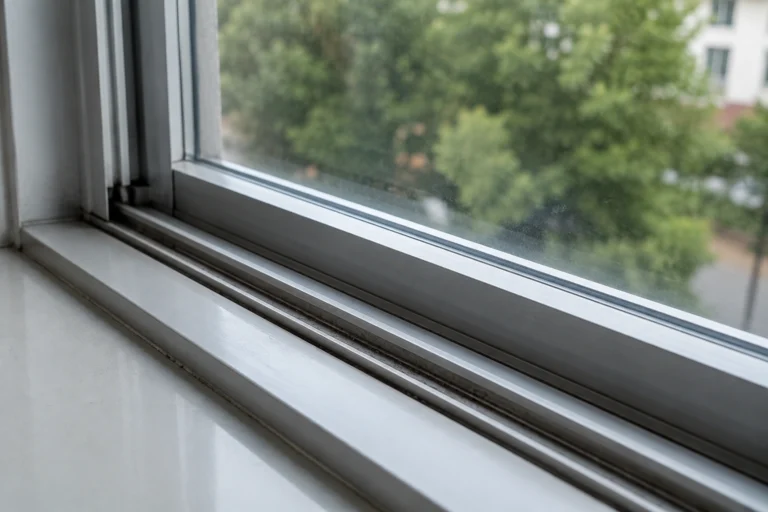
The cause most DIY guides miss: skip the frames, sills, and tracks, and dirt migrates back onto clean glass with the next rain or condensation. Aluminum oxidation, pollen packed into tracks, and grime in weep holes all contribute. A white milky film on fresh glass is the telltale sign — dirty frame water dried right back onto the pane.
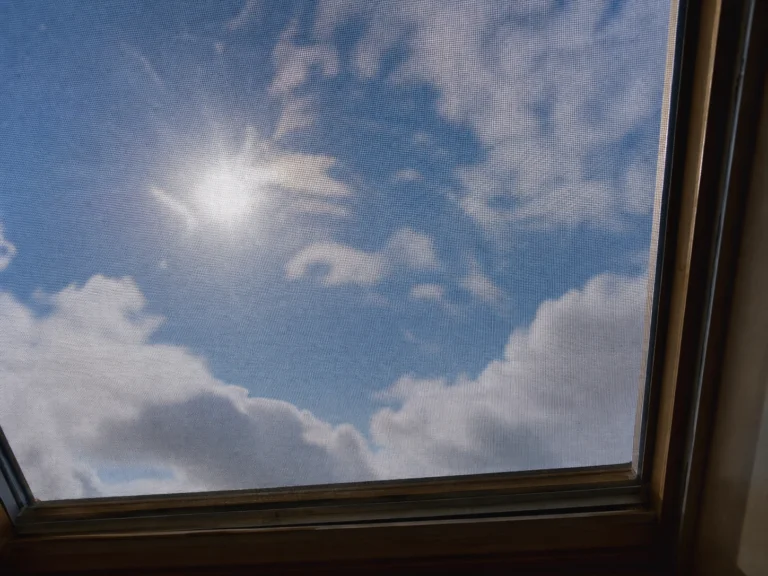
Dirty screens make it worse — they collect dust and pollen that the first breeze pushes onto clean glass. Clean them separately: vacuum with a soft brush or rinse flat with a garden hose, never high pressure, which stretches the mesh.
Professional cleaning always includes frames, sills, tracks, and screens — not just the glass. That is why professionally cleaned windows stay cleaner longer: there is less grime nearby to migrate back.
DIY vs. Professional: What's the Real Difference?
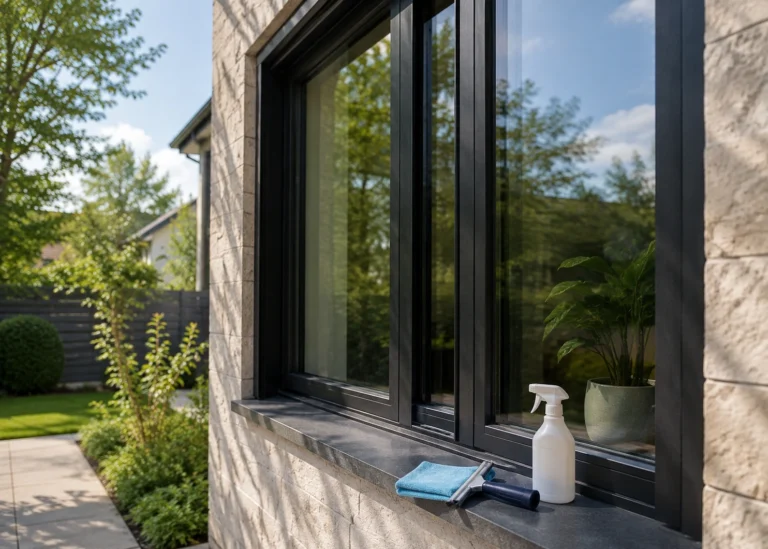
A homeowner typically works with a spray bottle or basic squeegee, one bucket, and whatever towels are handy. A pro brings sharp squeegee rubber, a strip washer, waffle-weave towels, and often a pure-water pole system for upper floors. The results gap is mostly tools and technique.
Safety matters too. Anything above the second floor means ladder work, and falls are among the most common serious DIY injuries. Exterior-only service doesn't even require you to be home, as long as areas are accessible.
Finally, compare what's included. Bids that skip screens, tracks, and sills look cheap — but those are exactly the parts that re-dirty your glass. Full service keeps windows clean for months instead of weeks.
When Streaks Mean a Bigger Problem
Sometimes what looks like streaks is hard water staining or etching, which no technique fixes. Clean properly, then inspect from an acute angle toward the light. Unchanged marks mean mineral deposits bonded to the glass, a damaged coating, or scratches — not dirt.
Light stains often respond to a 50/50 white vinegar compress: soak a towel, lay it on the stain up to an hour to dissolve minerals. Afterwards, a hydrophobic rain-repellent coating helps water bead off and slows recurrence.
The caveat: spots etched in over years of neglect may only partially improve. That's glass restoration, not cleaning — and an honest diagnosis beats another round of scrubbing.
Frequently Asked Questions
Why do I see rainbow streaks specifically?
They come from thin-film interference — a microscopically thin, uneven soap layer refracting light into colors. It signals too much squeegee pressure or too much soap, not a window defect. Lighter pressure and a milder soap mix eliminate them completely.
Should I use distilled water for window cleaning?
It helps where tap water is very hard, since it leaves no minerals behind. Portland's supply is very soft, so tap water is rarely the problem. Technique, blade condition, and working in the shade matter far more for streak-free results.
How often should I replace my squeegee blade?
For twice-a-year cleaners, replace it annually or at the first sign of nicks; daily pros may swap weekly. Run a fingertip along the edge — any nick leaves a visible line with every pass, so inspect the edge before each use.
Can I get streak-free windows without a squeegee?
It's difficult. Spray-and-wipe leaves residue because nothing mechanically removes the solution — microfiber pushes it around; only a squeegee edge truly clears it. If you won't learn the technique, calling a professional is the practical answer for consistently clear glass.
What does a white milky film on my windows mean?
It means dirty frame water dried back onto the glass — frames, sills, or tracks weren't rinsed first. Always clean and rinse the frames before the glass, so no dirty water runs back over your finished work and fully undoes it.
Why do my windows get streaky again so soon after cleaning?
Because the surrounding parts weren't cleaned. Track grime, frame oxidation, and screen dust migrate back onto glass with rain, dew, or condensation. If windows look dirty within weeks, the frames, sills, tracks, or screens need attention — not the glass.