How to Clean Windows After Construction
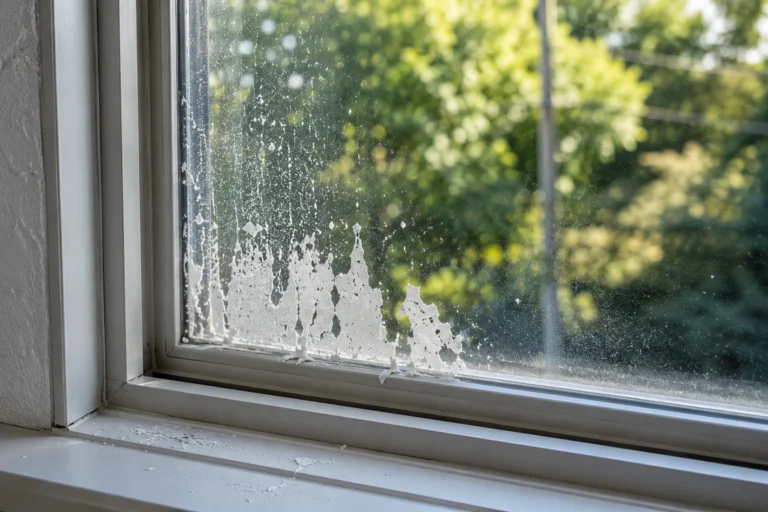
New windows come out of a construction project covered in things a normal cleaning routine was never built for — drywall dust, paint overspray, caulk smears, and manufacturer stickers with adhesive that’s had weeks to cure in the sun. Cleaned the wrong way, that residue doesn’t just look bad — the scraping technique used to remove it is one of the most common ways brand-new glass ends up permanently scratched. Here’s the actual, correct order of operations.
100+ REVIEWS |
INSURED & BONDED |
100% SATISFIED CLIENTS
What’s the right order for cleaning windows after construction?
1. Remove loose debris first, before anything gets wet
Use a shop vacuum with a soft brush attachment, held slightly away from the glass, to pull off heavy drywall dust and dirt. Peel off any large manufacturer stickers or protective film by hand at this stage too — doing it dry, before the glass is wet, keeps adhesive from smearing.
2. Wet the glass and scrape in one direction only
Apply a generous soap-and-water solution to lubricate the pane, then use a sharp glass scraper or fresh razor blade in single, straight-line pushes — never back-and-forth. This detail matters more than it sounds like: a back-and-forth motion is what drags grit trapped under the blade across the glass and causes fine scratching, while a single-direction push carries debris off the edge instead.
3. Finish stubborn spots with fine steel wool, not more scraping
For paint specks, caulk residue, or haze that the scraper couldn’t fully lift, 0000-grade steel wool or bronze wool used with plenty of soap gently removes what’s left without scratching standard glass — this is the step most DIY attempts skip, which is often why a “cleaned” post-construction window still looks hazy afterward.
4. Squeegee and detail like a standard cleaning
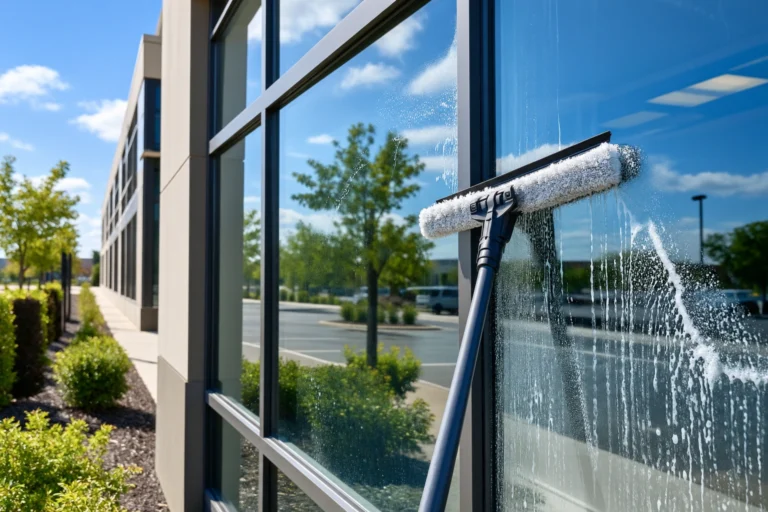
Once residue is cleared, the rest is a normal professional pass: squeegee in straight or reverse-S paths, wiping the blade dry after every stroke, then a dry microfiber cloth on edges, corners, and frames to prevent water spots.
Why does the scraping direction actually matter that much?
A scraper blade doesn’t just lift residue — it’s dragging a sharp edge across glass with whatever grit is caught underneath it. Pushed in a single direction, that grit gets carried off the pane. Dragged back and forth, the same grit gets ground into the glass surface repeatedly, which is the actual mechanical cause of the fine, hairline scratches that show up on otherwise “cleaned” new construction windows — often not obvious until the light hits them at the wrong angle weeks later.
What actually counts as “post-construction cleaning,” vs. a regular clean?
Real post-construction cleaning is closer to damage control than standard maintenance cleaning — the goal isn’t just clean glass, it’s safely removing materials (cured paint, caulk, drywall mud, adhesive) that a normal cleaning solution and squeegee pass were never designed to handle. That’s the practical distinction: a standard cleaning assumes dirt and film; a post-construction cleaning assumes actual construction material bonded to the surface, requiring the scrape-and-detail steps above before a standard clean is even possible.
Can I use just soap and a squeegee, and skip the scraper?
For light dust and fingerprints, yes. But for actual paint overspray, caulk smears, or sticker adhesive that’s cured, soap alone won’t lift it — you’ll end up scrubbing harder and longer with a standard pad, which risks the same kind of surface stress as improper scraping, just spread out over more time instead of concentrated in one bad stroke. The scraper-then-wool method isn’t extra work for its own sake; it’s the difference between a clean pane and one that looks permanently hazy no matter how much you scrub it afterward.
Is it worth hiring a professional for post-construction cleaning specifically?
For a small amount of light residue, a careful DIY approach with the steps above is workable. For a full new-build or remodel with heavy paint overspray, extensive stickers, or multiple rooms, the risk of an inexperienced scraping technique introducing scratches across brand-new glass is real enough that professional post-construction cleaning is usually worth the cost — the glass itself is the expensive part to replace, not the cleaning.
Got Questions?
We’re happy to help. If you can’t find the info you’re looking for, please don’t hesitate to reach out to us!
Call us (323) 831-1260
Book a Post-Construction Cleaning — see our full Post-Construction Window Cleaning Portland page for pricing and process.