Can Glass Etching Be Fixed? What Polishing Can (and Can’t) Restore
Once mineral deposits or acid damage have actually etched into a window rather than just sitting on top of it, ordinary cleaning stops working — but that doesn’t automatically mean the glass needs replacing. Professional glass restoration can fix a real range of etching and scratch damage. Knowing what it can and can’t do saves a lot of wasted effort before you start.
100+ REVIEWS |
INSURED & BONDED |
100% SATISFIED CLIENTS
What actually causes glass etching?
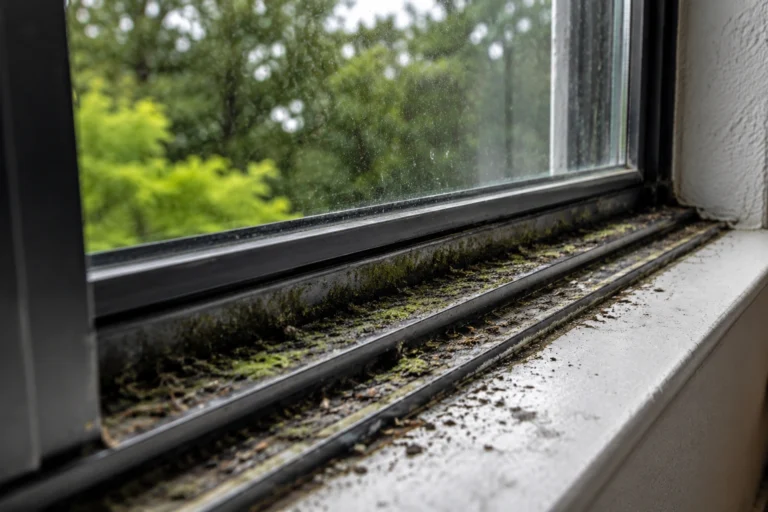
Etching happens when something reacts with or physically wears into the glass surface itself, rather than just leaving a film on top of it. The common causes include hard water mineral deposits (calcium and magnesium from sprinklers or rain runoff) that bond into the glass over time, mild acid damage from things like bird droppings, concrete splatter, or a cleaning chemical left on the glass too long, construction residue such as silica dust or stucco particles bonding to the surface, and physical surface scratches from wind-blown debris, abrasive cleaning pads, or a razor blade used incorrectly.
Is there a way to tell if damage is fixable or if the glass needs replacing?
There’s a genuinely useful, simple test: run a fingernail over the damage. If it’s a light surface scratch or haze you can’t really feel, professional polishing has a real chance of restoring it. If you can clearly feel the scratch with your nail, or the damage has visibly changed the shape of the surface, that typically means the damage runs too deep for polishing and glass replacement is the more realistic path.
How does professional glass restoration actually work?
The standard method is cerium oxide polishing — a rare-earth compound applied with an electric buffer, rotary polisher, or similar machine, never by hand. It works through a combination of gentle chemical interaction and mechanical polishing: under controlled heat and friction, it softens the microscopic high points on the glass surface while the polishing pad levels them down to the depth of the damage, gradually restoring clarity. This is a slow, careful process, not a quick wipe — the glass has to be kept consistently wet throughout, using a spray bottle to mist it periodically so the compound doesn’t dry out and start scratching the glass again. Glass temperature also needs monitoring during the process (professional guidance points to keeping it in roughly the 95–115°F range) since overheated glass that’s allowed to cool too quickly can crack.
What can cerium oxide polishing actually fix?
Based on how it’s used across the industry, cerium oxide is effective on: light surface scratches, hard water mineral haze, mild acid etching, and construction residue haze. It’s genuinely useful across a range of surfaces — home windows, shower glass, and commercial storefronts all respond to the same basic process.
What can’t be fixed with polishing?
A few categories are consistently flagged as out of scope: deep scratches or chips that can be felt with a fingernail, cracks, and frosted or textured glass — polishing actually removes the texture that creates a frosted finish, leaving a clear patch that’s very difficult to restore without professional re-etching or full replacement. Tinted or coated glass is also a caution area; the coating can be damaged by polishing, so it’s worth checking and testing before treating a coated pane the same as ordinary glass.
Is this a DIY project or a professional one?
It can be attempted by a determined homeowner with the right compound and equipment, but the professional consensus leans toward caution, especially on anything beyond very minor haze. Using the wrong abrasive is a real, documented failure mode — one glass owner’s own attempt with a generic automotive polishing compound did nothing at all to actual etching, despite dozens of passes, because it simply wasn’t the right material for glass. Professional-grade cerium oxide, proper polishing pads, safety gear, and a genuine willingness to test a small inconspicuous area first are what separate a successful restoration from wasted time — or a damaged window that now needs replacing anyway.
Got Questions?
We’re happy to help. If you can’t find the info you’re looking for, please don’t hesitate to reach out to us!
Call us (323) 831-1260