Signs of a Failing Window Seal in the Pacific Northwest
If you’ve noticed fog or haze trapped between your window panes — not on the glass surface, but inside it — that’s not something a cleaning fixes. It’s a sign your window’s seal has failed, and it’s a genuinely common issue for double-pane windows in the Pacific Northwest specifically, where our wet, temperature-swinging climate puts more stress on seals than drier regions do.
100+ REVIEWS |
INSURED & BONDED |
100% SATISFIED CLIENTS
How do I know if my window seal is actually failing?
The clearest sign is fogging or a hazy film visible between the two panes of glass on a double-pane window — not on the inside or outside surface, but sealed inside the gap itself. You can usually confirm this by trying to clean both accessible surfaces: if the haze doesn’t move or clear no matter which side you wipe, it’s between the panes, and that’s a seal issue, not a dirt issue.
Other signs worth watching for:
- Visible moisture or water droplets forming inside the sealed gap, especially after a cold night
- A window that feels noticeably less insulated than it used to — more draft, colder glass to the touch
- Discoloration or a slightly milky look to the glass that wasn’t there before, even right after cleaning
Why is this more common in the Pacific Northwest than other regions?
Seal failure happens when the gas or air trapped between panes escapes through a compromised edge seal, letting outside moisture in. Two things about our climate make this more likely here than in drier parts of the country:
1. Constant moisture exposure
With 100+ days of measurable rainfall a year, PNW window seals spend far more of the year wet or damp than seals in arid or seasonal-rain climates — and sustained moisture is exactly what accelerates seal breakdown over time.
2. Freeze-thaw and temperature swings
Even Portland’s relatively mild winters still put seals through repeated expansion and contraction as temperatures shift, which stresses the seal material incrementally, year after year.
3. Compounding biological growth
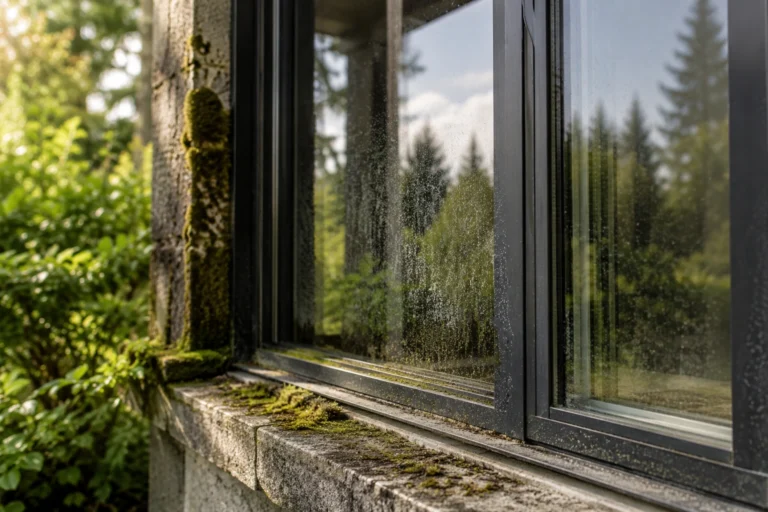
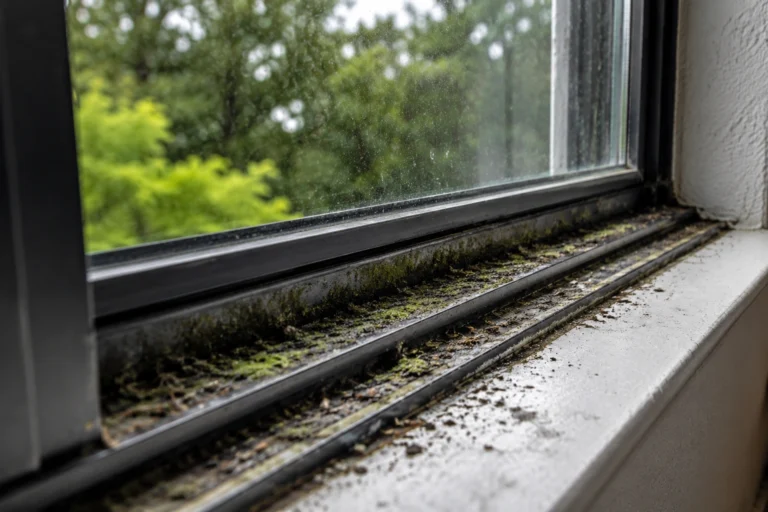
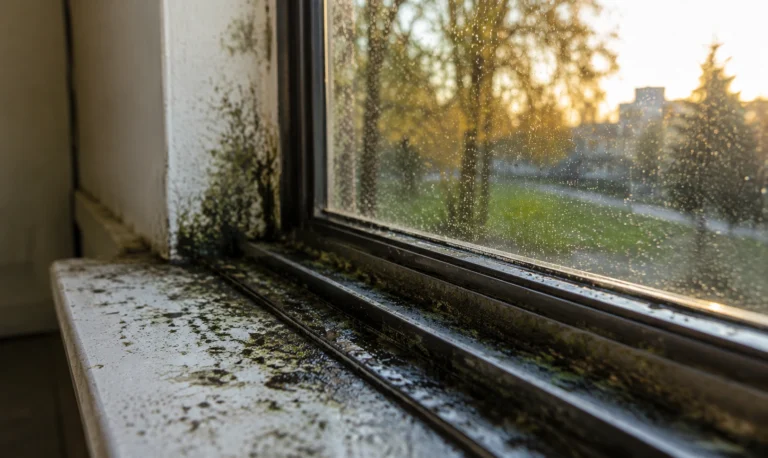
As covered on our moss and algae guide, moss that establishes in a window track can physically root into and stress the seal at the window’s edge — meaning here specifically, seal failure isn’t always purely a materials-aging issue. It can be accelerated by biological growth unique to this climate.
4. Prolonged dirt buildup on the seal itself
It’s a smaller factor than the two above, but real: dirt and grime sitting directly on a seal for extended periods, combined with repeated wetting, can gradually degrade the seal material over time — one more reason regular cleaning isn’t purely cosmetic maintenance in this climate.
Is a failed seal something a window cleaning can fix?
No — and it’s worth being direct about this rather than letting a cleaning imply otherwise. Once moisture is trapped between the panes, no amount of exterior or interior cleaning reaches it. A professional cleaning can, however, help you catch the problem early: a good technician checking your windows regularly will often notice early fogging or seal stress before it’s obvious to you, since they’re looking closely at every pane rather than glancing at the house from across the yard.
What actually fixes a failed seal?
Realistically, two options:
- Full window replacement — the most common fix, particularly for older or already-aging windows
- Glass unit replacement only — on some window systems, just the sealed glass insert (not the whole frame) can be replaced, which is less expensive if your frame is otherwise in good shape — worth asking a window company about specifically, since not every system supports this
- Specialized defog/restoration service. For some failed seals, a glass specialist can drill a small, discreet hole in the corner of the unit, clean out the moisture and residue trapped inside with specialized tools, and reseal it. This doesn’t work in every case — it depends on the window’s construction and how much damage has already occurred inside the unit — but where it’s an option, it’s meaningfully cheaper than replacement. Ask a local glass company directly whether your specific windows are a candidate before assuming replacement is the only route.
If the window is still under manufacturer warranty, seal failure is frequently a covered defect — it’s worth checking your paperwork or contacting the manufacturer directly before paying out of pocket, since many window manufacturers offer multi-year or even lifetime seal warranties that homeowners simply don’t know they have.
How often should older Portland-area homes get checked for this?
If your home has original or older double-pane windows — common across many of Portland’s pre-1980s neighborhoods — it’s worth having them visually checked at least once a year, ideally as part of a regular window cleaning visit rather than as a separate appointment. Catching a failing seal early doesn’t stop it from eventually needing replacement, but it does mean you’re planning for the cost on your own timeline instead of discovering it as a surprise.
Got Questions?
We’re happy to help. If you can’t find the info you’re looking for, please don’t hesitate to reach out to us!
Call us (323) 831-1260
Noticing fogging or a hazy patch on your windows? We check for early seal stress on every standard cleaning, at no extra charge — call( 323) 8311260 or see our Residential Window Cleaning page.